+1 (430) 999-3121
  +33 (0)4 82 82 97 97
  +971 (0)45 477 282

Biometrics: understanding the challenges and uses in business
In business environments, biometrics can help secure access to buildings and applications. Selecting devices, integrating access control, managing users and protecting personal data all require careful planning. This article explores practical use cases and the criteria for choosing a solution suited to an organisation’s needs.
What is biometrics and how does it work?
Biometrics refers to all technologies used to identify or authenticate a person based on unique physical or behavioral characteristics. These may include fingerprints, facial recognition, iris recognition, or even hand geometry.
The principle is based on capturing a biometric trait, converting it into digital data, and then comparing it with a template stored in a secure database. This process makes it possible to verify an individual’s identity with a high level of reliability. Unlike badges or passwords, biometrics relies on characteristics specific to each person, which greatly limits the risks of fraud or credential sharing.
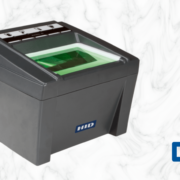
Today, biometric solutions can be easily integrated into existing access control systems and adapted to different security levels, from a simple entry point to critical infrastructure.
A wide range of applications for professional environments
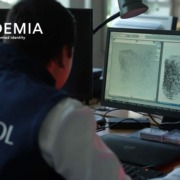
Biometrics is used in many professional contexts where access security is strategic. In businesses, it helps control access to buildings, sensitive areas, or workstations. It is also deployed in industrial sites, government administrations, healthcare facilities, and transport infrastructure.
Beyond access control, biometrics helps streamline traffic management and improve the user experience. It enables fast identification without any physical credential, making movement smoother while maintaining a high level of security. In certain high-traffic environments, it becomes a key lever for reconciling operational efficiency with regulatory requirements.
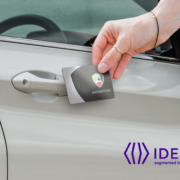
Biometrics can also be combined with other technologies, such as RFID badges or centralized management systems, in order to strengthen existing security arrangements and provide a comprehensive approach to identity control.
Biometrics and the challenges of security and compliance
While biometrics offers many advantages, it also raises important issues in terms of data protection. Since biometric information is sensitive by nature, its collection and processing must comply with a strict regulatory framework, particularly regarding privacy protection.
Current solutions include advanced data protection mechanisms such as encryption or local storage of biometric templates. The objective is to ensure that the data cannot be misused for unintended purposes.
In this context, choosing a biometric solution is not limited to technological performance alone. It must also take into account regulatory compliance, transparency in data processing, and user acceptance.
Biometrics is therefore part of a broader security approach, in which performance, reliability, and respect for personal data must be carefully balanced. For businesses, it represents a strategic lever to secure access while modernizing infrastructure.