+1 (430) 999-3121
  +33 (0)4 82 82 97 97
  +971 (0)45 477 282
Access Control: When International Innovation Redefines Access Management
Access control is undergoing a major transformation driven by digital evolution and increasing security requirements. The recent announcement of a strategic partnership in Japan between international technology players illustrates this momentum. Beyond a simple industrial agreement, this collaboration highlights new expectations surrounding access management: intelligent solutions, seamless integration with information systems, and a smooth user experience. Access control is now establishing itself as a strategic lever for both public and private organizations.
A Technological Partnership to Strengthen Access Management in Japan
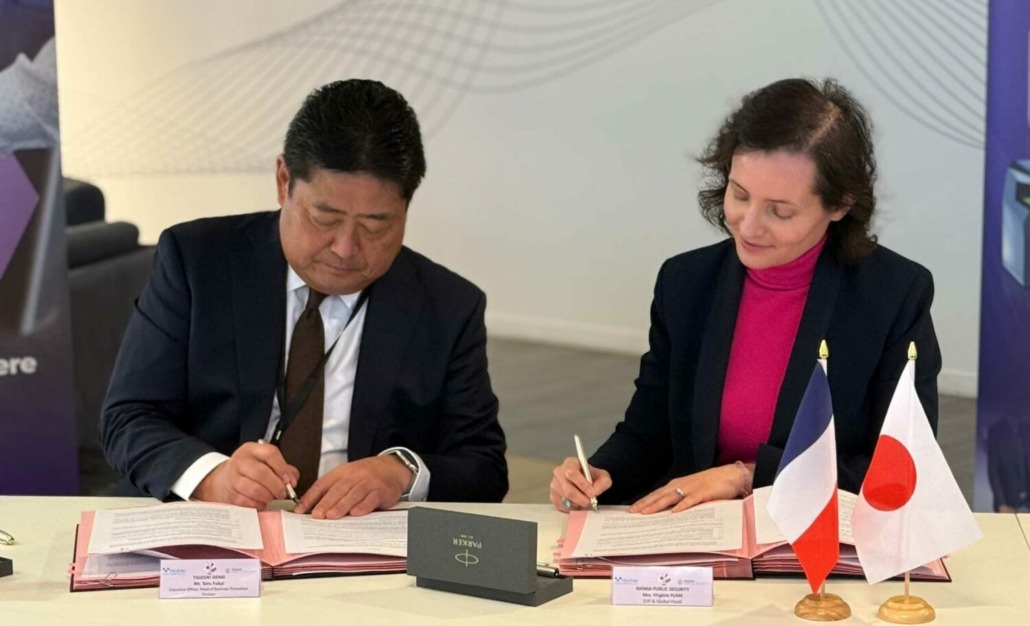
At the end of 2025, an innovative partnership was concluded between IDEMIA Public Security and Tsuzuki Denki Co., a recognized provider of network and IT solutions in Japan. The objective is clear: to strengthen access management in the Japanese market by combining advanced biometric expertise with strong digital infrastructure capabilities.
This agreement aims to develop and deploy access control solutions capable of meeting the specific needs of high-traffic and high-security environments. It aligns with a broader strategy to modernize existing systems by integrating reliable, scalable, and interoperable technologies. This collaboration reflects the growing importance of international partnerships in addressing increasingly complex security challenges.
Modern Access Control: Security, Fluidity, and Intelligence
Access control is no longer limited to a simple locking function. It has evolved into an intelligent identity and flow management system capable of combining high security standards with ease of use. Current solutions rely on various technologies, including secure badges, biometrics, multi-factor authentication, and centralized rights management.
Biometrics play a central role in this transformation. By using unique characteristics such as facial recognition or fingerprints, these technologies enhance identification reliability while reducing constraints for users. This approach is particularly suited to sensitive sites, critical infrastructures, and environments requiring precise access traceability.
Integrating access control systems with information systems and supervision platforms also enables real-time management, improved visibility over traffic flows, and enhanced capabilities for risk analysis and prevention.
A Global and Scalable Vision of Access Control
The partnership announced in Japan highlights a fundamental trend: access control must now be part of a comprehensive security and digital transformation strategy. Organizations are seeking solutions capable of evolving with their needs, integrating new technologies, and adapting to diverse regulatory and operational contexts.
This global approach not only secures physical access but also supports operational performance, business continuity, and user trust. In France, this vision echoes the challenges faced by many public and private stakeholders who must modernize their access control systems while ensuring reliability, compliance, and an optimal user experience.
Access control is therefore becoming a structuring tool at the intersection of security, technological innovation, and intelligent organizational management.
Source: https://www.idemia.com/press-release/idemia-public-security-and-tsuzuki-denki-co-launch-innovative-partnership-enhance-access-management-japan-2025-12-03